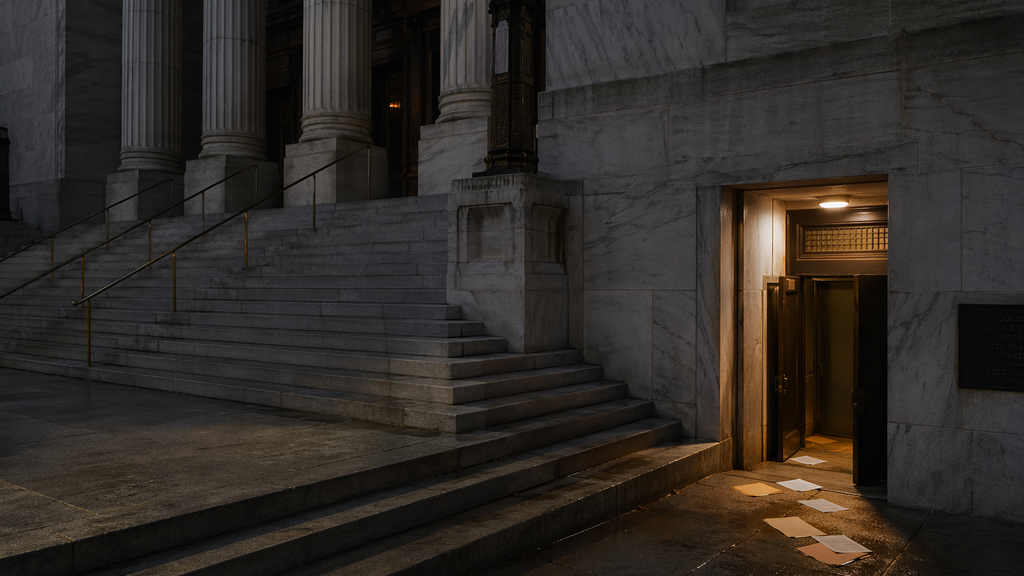
If you still think the Supreme Court’s “shadow docket” is a side room, you are watching the wrong building.
The newly reported 2016 Clean Power Plan memos matter because they expose the Court’s institutional self-awareness. When the Court issued a one-paragraph order halting Barack Obama’s signature climate policy before any lower court had ruled on the merits, several justices appear to have understood they were doing something unusual. Chief Justice John Roberts reportedly called the posture “not typical.” Justice Stephen Breyer reportedly described it as unusual for the Court to intervene while the court of appeals was still considering the case. Justice Elena Kagan reportedly said it would be unprecedented to second-guess the lower court without full briefing or a prior judicial decision.
That matters because it sharpens the real point. The emergency docket is no longer just where the Court handles genuine procedural emergencies. It is where the Court can act with maximum force and minimum explanation.
On the merits docket, authority comes with visible burdens: full briefing, oral argument, signed opinions, coalitions the public can inspect, and reasoning that can be attacked line by line. On the emergency docket, the sequence is reversed. The order comes first. The effect is immediate. The explanation, if there is much of one at all, is thin. The country changes anyway.
That is why the Court now operates in two tempos at once. One is public, formal, and ceremonial. The other is fast, tactical, and only partly illuminated. The first is how constitutional law is supposed to justify itself. The second is how national policy can be bent before that justification arrives.
Emergency action at the Supreme Court predates 2016, and some emergency relief is plainly necessary. Governments do move fast enough to moot review. Lower courts do issue conflicting commands. The danger comes from normalization: emergency orders now reach fights that sit at the center of national power.
Those fights now include the core disputes of national power. Reuters has described a term already packed with questions involving presidential authority, birthright citizenship, tariffs, voting rights, and campaign finance. At the same time, the Court has increasingly used emergency orders to let major Trump administration policies proceed while legality remained contested below, including measures touching immigration, transgender service members, agency officials, federal layoffs, and foreign aid. This is governance in provisional form, dressed in the costume of housekeeping.
Justice Ketanji Brown Jackson put the institutional damage more clearly than most critics have. She said the Court’s expanding use of the emergency docket has had a “corrosive effect” on the judicial system and creates “zombie proceedings” in the lower courts. That phrase lands because it describes the split between paper process and real power. The lower courts continue to move. Briefs are filed. Orders are entered. Proceedings remain technically alive. Above them, the Supreme Court has often already changed the practical and political reality of the case.
A defender of this system could say the Court is simply adapting to a faster, more combative political order. Why wait years for a polished opinion if an immediate order can prevent what the justices see as unlawful action now? That argument has force. It misses the constitutional cost. Public power is supposed to come with public reasons, especially when the stakes are national and immediate. If the Court repeatedly chooses the channel that demands the least explanation in the most consequential disputes, speed starts looking like insulation rather than modesty.
The 2016 memos matter because they cut against the comforting story that this transformation was accidental, or merely the byproduct of hectic times. They suggest the justices understood the break with ordinary practice even as they made it. Ten years on, the pattern is clearer. Presidents learn that delay can mean defeat. Litigants learn that the shortest route to power may be an emergency application rather than persuasion on a full record. Lower courts learn that they may be managing aftermath while the real constitutional weather has already changed overhead.
The deeper issue is the bargain public power owes the public: reasons alongside force. When the Supreme Court repeatedly decides the terms of national conflict through fast, thin, partly inscrutable orders, it moves from refereeing the constitutional system to governing through the side door — and hoping the country mistakes that for restraint.